
Ban Plastic Bags Now
Plastic shopping bag
From: Wikipedia, the free encyclopedia
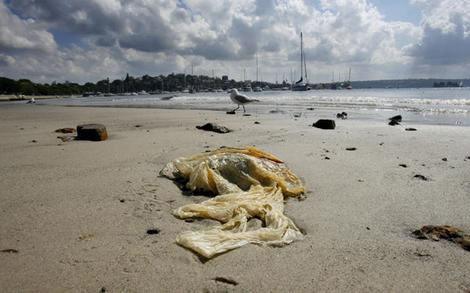
Plastic Shopping Bags Bans
Plastic bags are either restricted or completely banned in more than 25 percent of the world.[16] Belgium, Italy (total ban since January 1, 2011), Ireland and Hong Kong have legislation discouraging the use and encouraging the recycling of plastic bags by imposing a fixed or minimum levy for the supply of plastic bags or obliging retailers to recycle.[17][18][19] In other jurisdictions, including three states and territories of Australia, Bangladesh, South Africa and Thailand, plastic bags are banned.[20][21] In the United States bans were imposed on local level, starting with San Francisco in 2007, followed by other jurisdictions including Los Angeles County in 2010.[16][22] Similar bans on municipality level were imposed in India, Mexico and UK.[17]
Manufacture and composition
Plastic shopping bags are commonly manufactured by blown film extrusion.[citation needed]
Plastic shopping bags are usually made of polyethylene. This can be low-density, resin identification code 4, or most often high-density, resin identification code 2. Most plastic bags are derived from natural gas.[5]
Biodegradable materials
Although not in use today, plastic shopping bags could be made from Polylactic acid (PLA) a biodegradable polymer derived from lactic acid.[6] This is one form of vegetable-based bioplastic. Bags can also be made from degradable polyethylene film. Most degradable bags do not readily decompose in a sealed landfill[7] and represent a possible contaminant to plastic recycling operations.
Environmental concerns
According to Vincent Cobb a seller of reusable bags, each year millions of discarded plastic shopping bags end up as litter in the environment when improperly disposed of.[8] The same properties that have made plastic bags so commercially successful and ubiquitous—namely their low weight and resistance to degradation—have also contributed to their proliferation in the environment. Due to their durability, plastic bags can take up to 100 years to decompose.[9] As they slowly decompose, plastic bags break into tiny pieces and leech toxic chemicals into soils, lakes, rivers, and oceans.[8]
On land, plastic bags are one of the most prevalent types of litter in inhabited areas, becoming an eyesore to local residents. At their worst, plastic bags can clog drainage systems and contribute to flooding, as occurred in Bangladesh in 1988 and 1998.[10] When plastic bags are washed out to sea, they pose a threat to animal life. In the decades since plastic bags first came into wide use, there has been a dramatic increase in the quantity of plastic bags found floating in oceans around the world. Once in the ocean, these bags can strangle wildlife or, if ingested, can choke or cause wildlife to starve to death.[8] Some marine animals including sea turtles, and dolphins have been killed as a result of ingestion of plastic marine litter, including plastic bags.[11]
Littering is often a bigger problem in developing countries, where trash collection infrastructure is less developed, than in developed nations, however once plastic bags are swept out to sea they can travel long distances in ocean currents.[12]
Reuse and recycling
Heavy duty plastic shopping bags are suitable for reuse as reusable shopping bags. Lighter weight bags are often reused as bin bags (trash bags) or to pick up pet faeces. All types of plastic shopping bag can be recycled into new bags where effective collection schemes exist.
Since internet rumours started to claim that the Environmental Protection Agency had reported only 1% of plastic bags were recycled, significant attention resulted in a 700% growth in the recycling industry as new capacity led to a 7% rate. This resulted in more than 800 million lbs of bags and other film being recycled in 2007 alone [13] Each ton of recycled plastic bags saves the energy equivalent of 11 barrels of oil, although most bags are produced from natural gas derived stock.[14] In light of an Australian study showing more than 60% of bags are reused as bin liners and for other purposes,[15] the 7% recycling rate account for 17.5% of bags available for recycling.
Custom Bags
Custom Bags
Company Logo
Stand out from your competition and have your own reusable shopping bag.
Your Logo
Don't have a LOGO yet? Just tell us your requirments and let us do it for you.
Your Bags
The possibilities are endless. You can put any design on these bags.
Get a Quote of Custom Bags Now!
"I just don't like It, I love it. Fits my personality."